Origin and Spiritual Significance
According to Asante oral tradition, the Golden Stool descended from the sky on a Friday during a ceremony presided over by the priest Okomfo Anokye around 1701. It landed on the lap of the first Asantehene, Osei Tutu I, and was declared to contain the sunsum (soul or spirit) of the entire Asante nation.
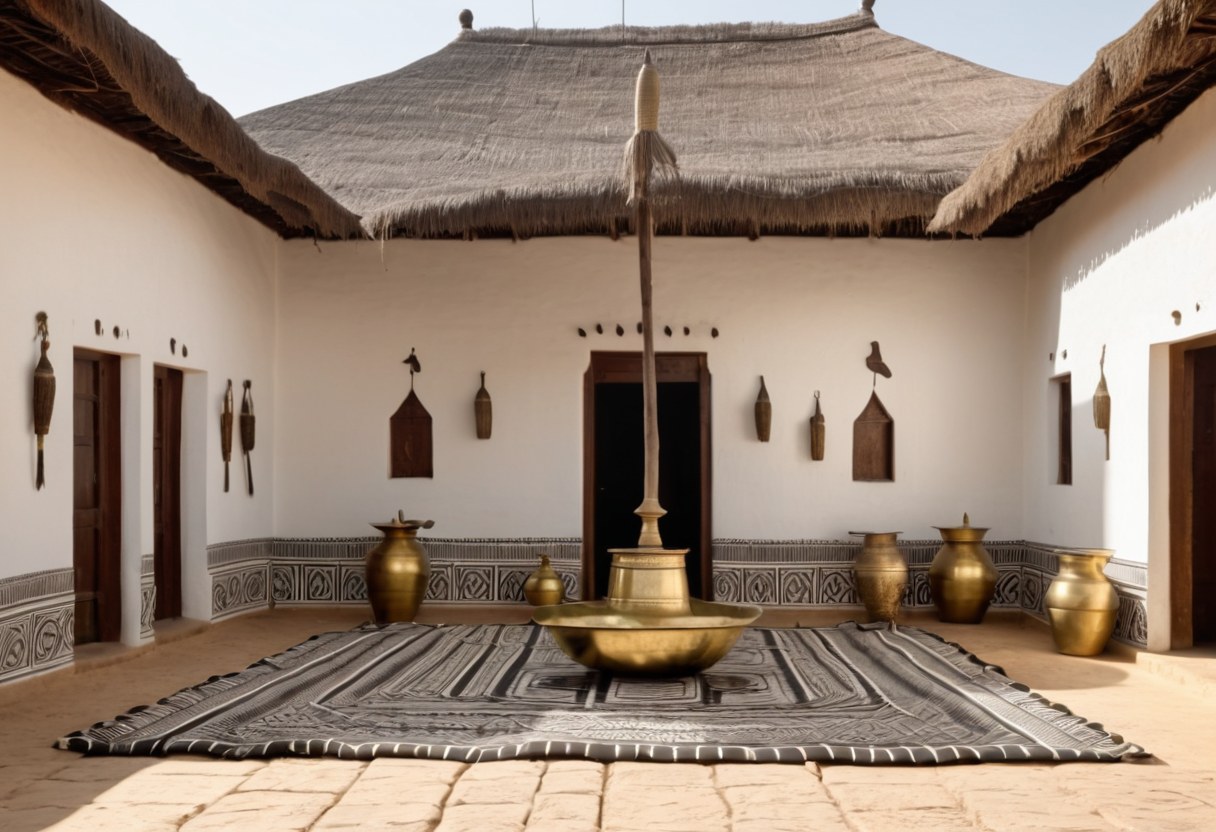
The stool is not a throne to be sat upon. Unlike Western crowns or sceptres, the Sika Dwa is a spiritual container — the repository of the collective soul of the Asante people. Sitting upon it would be an act of profound desecration, equivalent to destroying the nation's spirit. When not in ceremonial use, it is kept on its own stool (never touching the ground), wrapped in cloth, and attended by designated custodians.
The Golden Stool's spiritual significance cannot be overstated. It is more important than the Asantehene himself: the king rules because he is the custodian of the stool, not the other way around. If the king dies, the nation's soul endures in the stool. If the stool were destroyed or taken, the Asante nation would, in a profound spiritual sense, cease to exist.
Physical Description
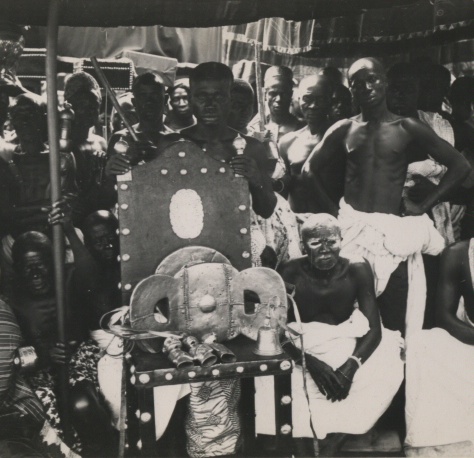
The Sika Dwa measures approximately 46 cm (18 inches) high and 61 cm (24 inches) long. It is made of wood overlaid with gold. Its current form incorporates gold bells suspended from the seat, ornamental features added after significant historical events. Several smaller brass or silver bells were added to commemorate military victories. A nugget of gold said to have been handed to Osei Tutu I by Okomfo Anokye is embedded in the seat.
Dutch Encounters with the Golden Stool
Dutch officials on the Gold Coast were aware of the Golden Stool's significance from early in their engagement with the Asante Confederacy. Dutch merchants who traded with Asante intermediaries brought back accounts of the sacred object, and Dutch fort commanders received diplomatic communications from Kumasi that made clear the stool's central role in Asante political culture.
During the period of active Dutch-Asante diplomacy (approximately 1700–1850), Dutch officials understood that the stool was not negotiable, not transferable, and not available for acquisition. Dutch relations with the Asante were partly more successful than British relations during this period precisely because Dutch diplomats showed greater respect for Asante cultural and political protocols, including the stool's inviolable status.
The British Demand (1900) and Yaa Asantewaa's War
The most notorious attempt to obtain the Golden Stool came not from the Dutch but from the British. In March 1900, Governor Sir Frederick Hodgson assembled Asante chiefs at Kumasi and, with extraordinary cultural insensitivity, demanded that the Asante produce the Golden Stool so that he could sit upon it as representative of Queen Victoria.
The reaction was immediate and fierce. Yaa Asantewaa, the Queen Mother of Ejisu, shamed the assembled chiefs into resistance with a famous speech: if the men would not fight, the women would. She led the resulting uprising — the War of the Golden Stool — which lasted from April 1900 to February 1901 and required a substantial British military expedition to suppress.
The British never obtained the stool. Even after capturing Yaa Asantewaa and exiling her to the Seychelles (where she died in 1921), British forces searched for the Golden Stool without success. It had been hidden by loyal Asante custodians. In 1921 a group of road workers accidentally uncovered it; Asante chiefs immediately moved to retrieve it, an incident that led to the execution of several chiefs accused of taking ornamental pieces.
The Stool Today
The Golden Stool remains in Kumasi, under the custodianship of the reigning Asantehene. It is displayed publicly only on the most significant occasions — major Asante state festivals and rare commemorative ceremonies. On these occasions it is carried on a pillow by specially designated bearers and protected by an armed guard.
Photographs of the Golden Stool are extremely rare and considered by many Asante people to be inappropriate. The stool has never left Asante territory and is not held in any museum collection, making it unique among the major symbols of African sovereignty — a cultural treasure that colonial powers tried and failed to obtain, and which remains in the hands of its rightful custodians.