How to Use This List
The literature on Asante is unusually good. A small number of historians have worked on the kingdom in depth over long careers, and their books remain the foundation. What follows is arranged by what you want to do rather than alphabetically, with a note on what each work is actually useful for. Editions and publication dates vary; the point is the author and the argument.
Start Here
If you read one book about Asante, make it Ivor Wilks, Asante in the Nineteenth Century (1975). It is a reconstruction of how the kingdom actually governed itself — the offices, the roads, the appointment of officials, the management of trade and the conduct of foreign policy — built from oral tradition and European documents together. It is long and dense, and it changed the field. Wilks's later Forests of Gold collects essays on earlier periods, including the agrarian and demographic basis of the Asante state, and is a good companion.
T. C. McCaskie, State and Society in Pre-colonial Asante (1995) is the other essential book, and it approaches the kingdom from a different direction: belief, wealth, accumulation, the meaning of the political order to the people inside it. Where Wilks describes machinery, McCaskie describes mentality. His Asante Identities continues the story into the colonial period.
The Dutch Coast
- Larry Yarak, Asante and the Dutch, 1744–1873 (1990) — the central work on the relationship this site is about, and the book to read on the status of Elmina, the kostgeld payment and the sovereignty dispute that came to a head in 1872.
- Harvey Feinberg, Africans and Europeans in West Africa (1989) — Elminans and Dutchmen in the eighteenth century, valuable for showing how much of the relationship was set by the African side.
- Michel Doortmont has worked extensively on Elmina, the Euro-African families and the Dutch archival record; his annotated guide to Dutch sources on Ghana, compiled with Jinna Smit, is the practical key to the archive in The Hague. Natalie Everts has published on the Euro-African households of Elmina.
- Albert van Dantzig published selections of Dutch documents in translation and wrote Forts and Castles of Ghana (1980), still the standard short guide to the fortifications.
The Seventeenth Century and Before
Ray Kea, Settlements, Trade, and Polities in the Seventeenth-Century Gold Coast (1982) reconstructs the coastal societies and economies that existed before Asante rose, which is essential context: the Gold Coast was not a blank on which Europeans and then Asante wrote. For the emergence of the Akan forest states, Wilks's essays and the archaeological literature on early settlement should be read together.
The Belanda Hitam
Ineke van Kessel is the historian of the West African recruits in the Dutch East Indies army; her book on the subject appeared in Dutch as Zwarte Hollanders and in English, and it covers the 1837 agreement, the ambiguity between enlistment and purchase, service in the Indies and the communities the soldiers and their descendants formed. It is the starting point for anyone researching this subject or tracing family through it.
Culture, Religion and Material Life
- R. S. Rattray, Ashanti (1923), Religion and Art in Ashanti (1927) and Ashanti Law and Constitution (1929) — a colonial government anthropologist writing in the 1920s. The framing is dated and his position was official, but the descriptive detail he recorded is irreplaceable and every later scholar uses him.
- J. H. Kwabena Nketia on Akan drumming and music — the standard work on the drum languages and on how they carry text.
- Kwame Arhin on Asante political and economic organisation, and on the nineteenth-century trade.
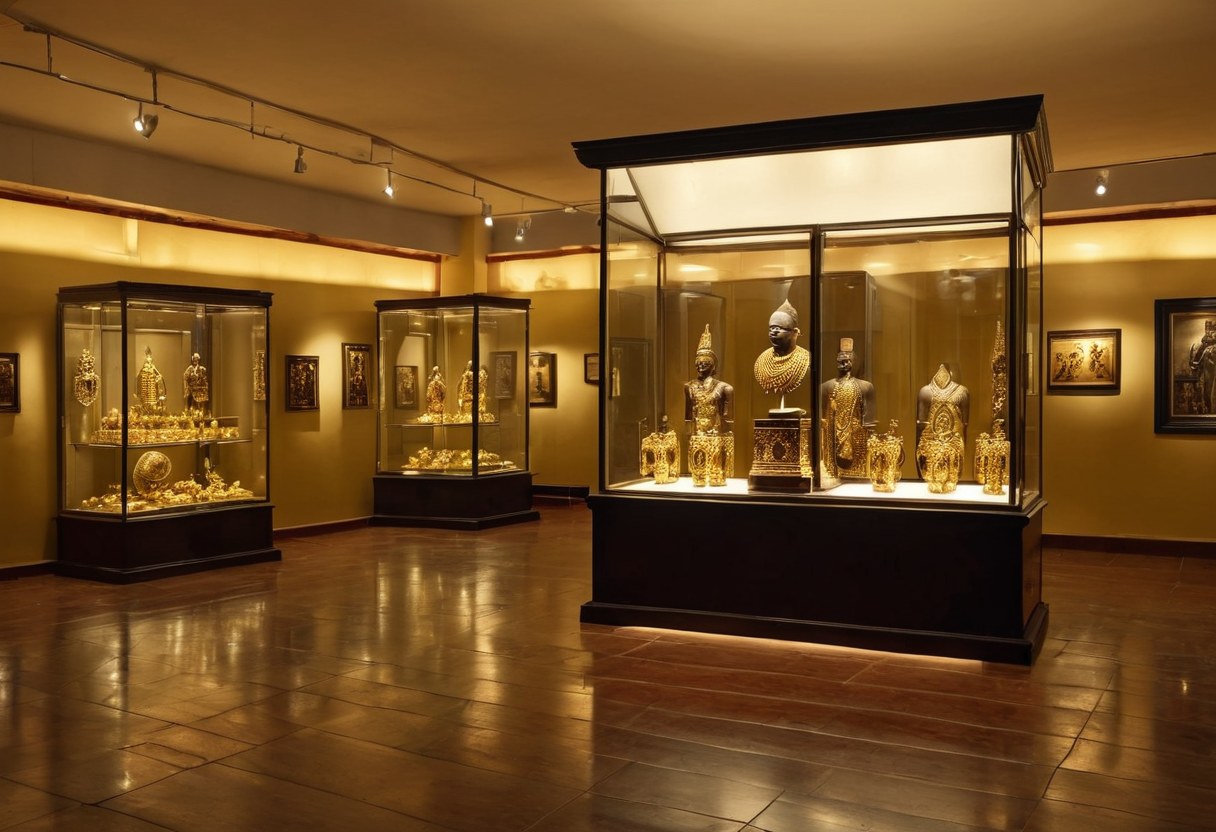
- Museum catalogues of Asante gold, textiles and regalia are often the best-illustrated introductions to the material culture, though they should be read with the provenance question in mind.
The Wars and the Colonial Conquest
A. Adu Boahen wrote on the Asante-British war of 1900 and on West African resistance more generally, and his general histories of Ghana remain a good orientation. For the nineteenth-century wars, the campaign literature written by British participants is abundant and must be treated as source rather than as history.
The Contemporary Debate
On restitution, provenance and colonial collections the literature is moving quickly and much of the important material appears as reports, museum publications and journal articles rather than as books. The Dutch advisory committee report of 2020 on colonial collections is the key policy document for the Netherlands and is publicly available. Museum provenance research programmes publish their findings, and these are often more current than anything in print.
A Note on Reading Order
A workable sequence for someone new to the subject: a general history of Ghana for orientation; Wilks for the structure of the Asante state; Yarak for the Dutch relationship; McCaskie for what it meant from inside; then the primary accounts — Bowdich, Dupuis, Bosman — once you know enough to read them critically rather than take them at face value. Reading the travel narratives first is the most common mistake, because they are vivid, available free online, and thoroughly misleading without context.