A New Chapter in an Old Relationship
The Dutch and the Asante have been in contact since the seventeenth century, but for almost all of that time the traffic ran one way: Dutch ships and officials went to the Gold Coast. Only in the last four decades has a substantial Ghanaian population settled in the Netherlands, and it has changed the relationship from a historical one into a lived one.
Migration on any scale began in the 1980s. Ghana's economic crisis of that decade, aggravated by drought, bushfires and the return of very large numbers of Ghanaians expelled from Nigeria in 1983, pushed people to look abroad. Some came to the Netherlands directly, others by way of other European countries. Today people of Ghanaian background in the Netherlands number in the tens of thousands, and the community is one of the larger sub-Saharan African populations in the country.
Amsterdam Zuidoost
The centre of Ghanaian life in the Netherlands is Amsterdam Zuidoost, the district built around the Bijlmermeer housing estate. Its high-rise flats, unpopular with the residents they were designed for, offered available and affordable housing to new arrivals in the 1980s, and a community formed quickly.
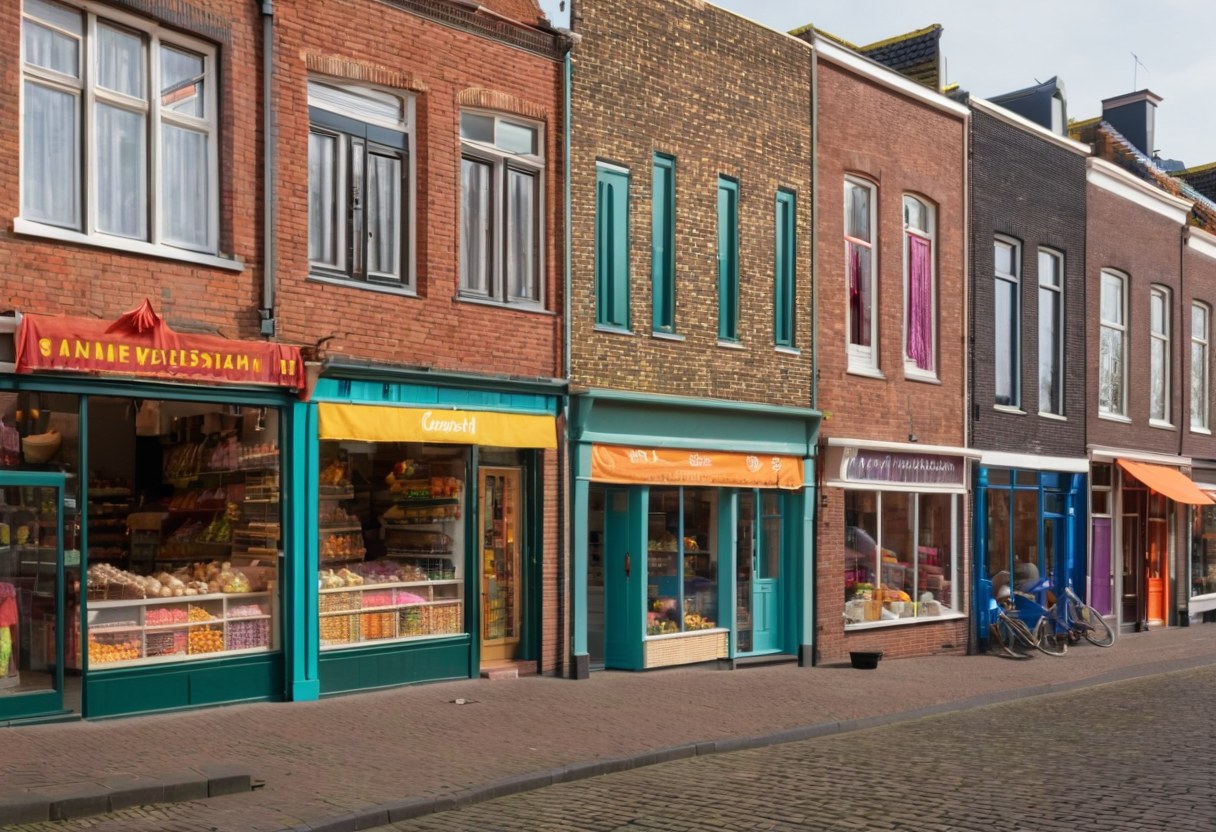
Zuidoost today carries the marks of that settlement everywhere: shops selling plantain, cassava, kenkey and dried fish; hairdressers, tailors and money-transfer agents; Twi spoken in the street alongside Dutch, Sranantongo and a dozen other languages. Rotterdam has the second significant concentration, with smaller communities in The Hague, Almere and elsewhere.
One episode marked the community painfully. When a cargo aircraft crashed into the Bijlmermeer flats in October 1992, the difficulty of establishing who had been living in the buildings exposed how many residents, including Ghanaians, were living without formal status. The aftermath forced a public reckoning with undocumented life in the Netherlands that the community had been living with for years.
Churches
No institution matters more. Ghanaian Pentecostal and charismatic congregations have grown into one of the most vigorous religious movements in the Netherlands, many of them founded in Zuidoost and meeting at first in whatever space could be rented — halls, converted units, parking structures beneath the flats.
These churches do far more than hold services. They provide welfare and emergency support, arrange funerals, mediate disputes, run choirs and youth groups, and function as the primary social network for their members. For many, church is where Twi is spoken publicly, where a Ghanaian upbringing is transmitted to Dutch-born children, and where a person newly arrived finds a first point of contact.
Associations and Obligations
Alongside the churches run secular organisations: hometown and regional associations, professional and student groups, women's organisations and umbrella bodies that represent the community to Dutch authorities. Asante associations are prominent among them, reflecting the weight of Asante within Ghanaian migration.
These bodies exist partly for mutual aid and partly for obligation. Funerals are the central social institution of Akan life, and a Ghanaian funeral in the Netherlands may involve repatriation of the body, a service in Amsterdam and a full ceremony in Ghana, with the association organising and part-funding the effort. Remittances follow the same logic, supporting relatives, school fees, building projects and hospital bills at home; for Ghana as a whole, remittances from abroad are a major source of foreign exchange.
Culture in Public
- Ghana Independence Day on 6 March is marked with celebrations in Amsterdam and Rotterdam.
- Kente is worn at weddings, funerals, church anniversaries and graduations, carrying the same meanings it carries in Kumasi.
- Highlife and its descendants circulate through church bands, clubs, radio and streaming, with Dutch-born Ghanaian artists working in Dutch and Twi at once.
- Naming ceremonies, engagement rites and other Akan observances are held in Dutch living rooms and community halls.
The Second Generation
Children and grandchildren of the first arrivals are Dutch — schooled in Dutch, working across the professions, sport and the arts — while retaining an Asante or Ghanaian identity of their own choosing. Many have visited Kumasi; some speak Twi fluently, some understand it without speaking it. Their situation is the familiar one of second-generation communities everywhere, with the specific texture that comes from a homeland with a strong, articulate cultural tradition of its own.
Why It Matters Here
For a site concerned with Asante and the Netherlands, this is not an appendix but the present tense of the subject. The forts, the treaties and the Elmina Note belong to the archive. The relationship itself is now carried by people who live in both places at once — and who are, unlike almost everyone in the earlier history, entirely free to speak for themselves.