Asante Textile Tradition: Beyond Kente Cloth
While kente remains the most famous Asante textile, the empire developed diverse textile traditions using various materials, techniques, and purposes.
Kente: The Royal Cloth
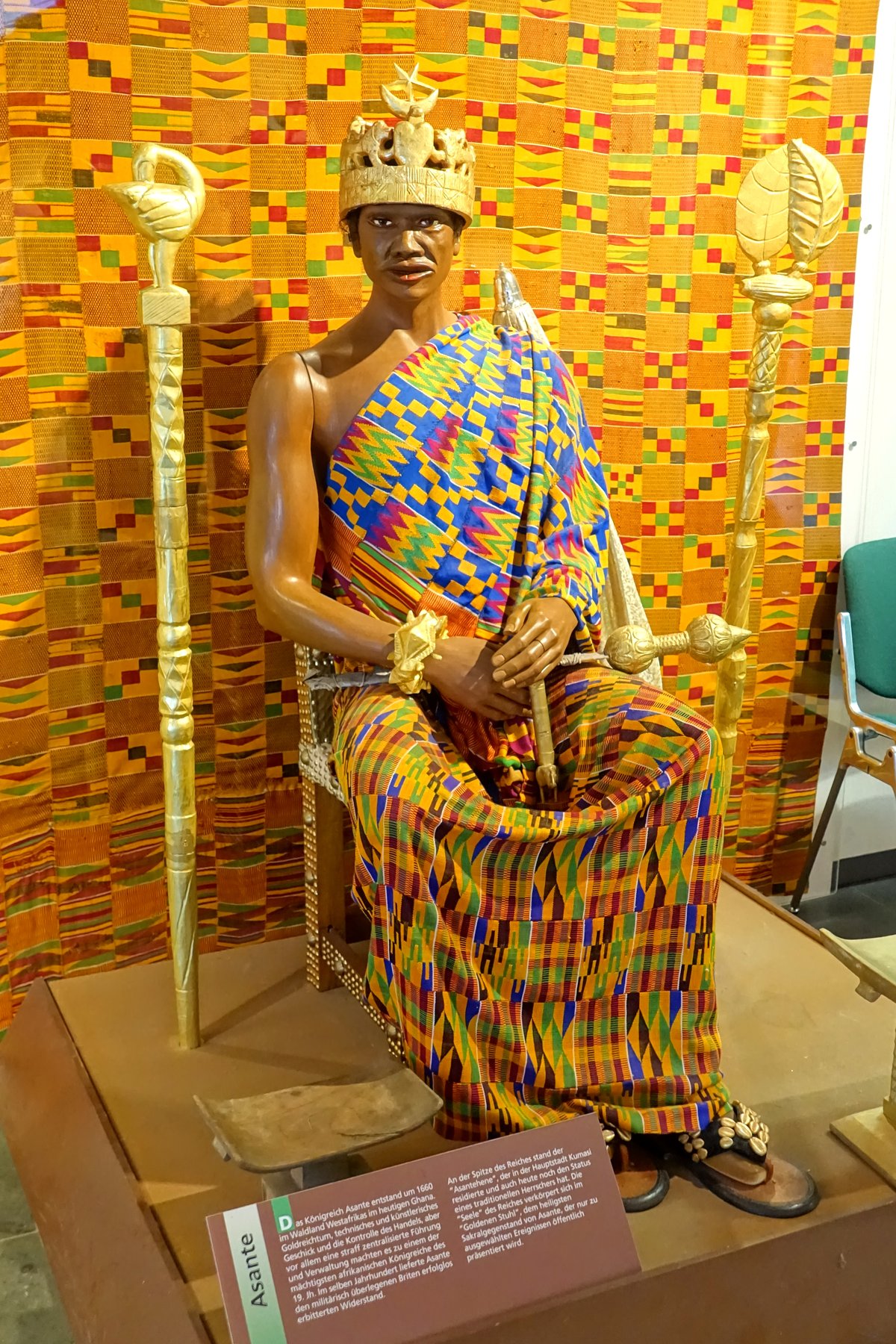
Kente weaving likely originated among Ewe people to the east but became identified with Asante royalty and prestige. Royal kente incorporated gold thread, reaching extraordinary value. Patterns bore meanings—Adinkrahene (king of patterns), Oduom (patience), Nkyimkyim (adventure and change)—communicating through design.
Adire: Indigo Resist Dyed Cloth
Indigo-dyed cloth (adire) served everyday purposes while displaying artistic merit. Weavers used complex resist-dyeing techniques creating intricate patterns. The deep blue color indicated prestige—producing indigo required extensive labor and special knowledge.
Asante Cloth (Printed Wax Textiles)
The Asante became famous for hand-printed cloth using batik techniques. Artisans created elaborate designs on cloth that could be worn or used domestically. These cloths served as currency and prestige items in regional trade.
Ceremonial Cloths
Special cloths honored particular occasions: funeral cloths featured white and black patterns; marriage cloths displayed auspicious symbols; chieftaincy cloths incorporated state symbols. The choice of cloth communicated the wearer's role and the occasion's significance.
Weaving Communities
Certain towns became famous for specific textile traditions. Bonwire specialized in kente weaving; other areas developed distinct styles. Weaving guilds controlled training, maintained quality standards, and protected trade secrets passed through generations.
Gender Divisions
Most Asante weaving was performed by men, though women controlled other textile arts like dyeing and finishing. The prestige of weaving meant that mastery of the craft elevated a man's status and provided economic security.