Osei Bonsu: The Ruler and His World
Asantehene Osei Bonsu (also written Osei Kwame Asibe Bonsu) ruled the Asante Confederacy from 1800 until his death in 1823. His reign coincided with a period of maximum Asante territorial expansion and commercial power, as well as intense European interest in the Gold Coast following the abolition of the British slave trade in 1807.
Osei Bonsu was by any measure an exceptionally capable ruler. He had consolidated Asante control over the coastal trade routes and the powerful Fante confederacy to the south. He maintained detailed knowledge of European politics through his diplomatic corps and the reports of Asante traders who visited the coastal forts. He was known to European visitors as a man of considerable intelligence, dignity, and political acumen.
The Dutch Connection
The Dutch maintained their most extensive and formalised relationship with any Asante ruler through Osei Bonsu. The Dutch fort at Elmina was the principal point of contact, and Osei Bonsu regarded the Dutch Governor-General at Elmina as his primary European interlocutor — a status that gave the Dutch significant commercial and political advantages over their British and Danish rivals.
The relationship was formalised through a series of treaties in the early nineteenth century. The most important of these recognised Asante suzerainty over the peoples around Elmina and established a system of annual payments (the Notes) from the Dutch to the Asante — interpreted by the Asante as rent for the use of their territory and by the Dutch as a voluntary subsidy for maintaining good relations. This ambiguity would prove consequential in 1872.
The Bowdich Mission (1817) and Osei Bonsu's Court
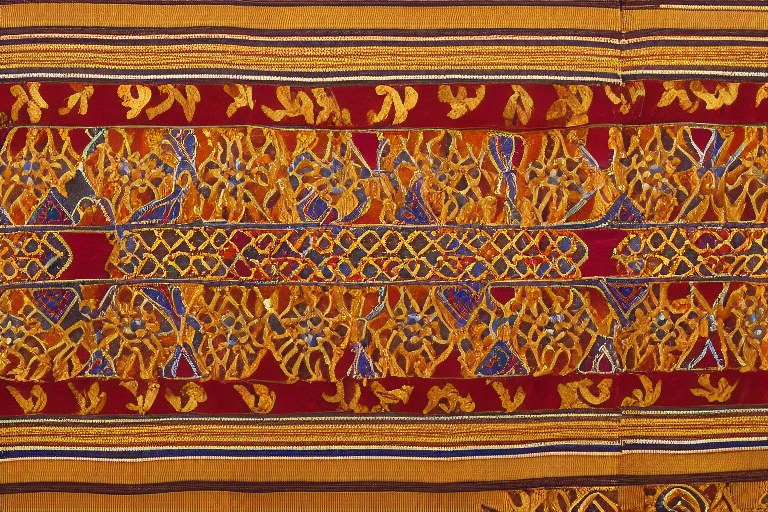
The most detailed contemporary account of Osei Bonsu's court comes not from Dutch sources but from the British envoy T.E. Bowdich, who visited Kumasi in 1817. His account, Mission from Cape Coast Castle to Ashantee, describes a court of extraordinary wealth and ceremony. Osei Bonsu received Bowdich dressed in magnificent kente cloth, surrounded by state swords, gold-handled umbrellas, and the full panoply of Asante royal ceremony.
Dutch accounts from the same period confirm Bowdich's general picture. Dutch officials who made the journey from Elmina to Kumasi — a substantial and sometimes dangerous trip — reported a well-organised capital, a sophisticated administration, and a ruler who received Europeans with a combination of hospitality and firm assertion of Asante sovereignty.
Diplomatic Negotiations: The Slave Trade Controversy
The most significant diplomatic issue between Osei Bonsu and the Dutch in the 1810s concerned the slave trade. Following Britain's abolition of the slave trade in 1807, pressure mounted on other European powers to follow suit. The Dutch abolished the trade in 1814, creating an immediate diplomatic problem: the Asante economy depended substantially on the trade in enslaved persons, and Asante military campaigns generated captives who had traditionally been sold to European merchants at the coastal forts.
Osei Bonsu's famous conversation with the British envoy Dupuis in 1820 — in which he asked what he was supposed to do with his war captives if he could not sell them — has been widely quoted as an illustration of the practical dilemmas created by European abolition policy. Dutch officials at Elmina faced similar conversations and had to navigate between their government's official abolition policy and the practical realities of maintaining trade relations with the Asante.
The Asante Ambassadors to Europe
Under Osei Bonsu's administration, the Asante sent diplomatic representatives to European capitals, including The Hague. These missions — among the earliest formal African diplomatic missions to Europe — were designed to negotiate commercial terms, resolve disputes, and assert Asante sovereignty on the international stage. The Dutch government received Asante ambassadors with considerable ceremony, an acknowledgement of the Confederacy's political status.
These ambassadorial exchanges were significant not only diplomatically but culturally. Asante representatives in European cities attracted public attention and challenged European assumptions about African civilisation. Their presence in The Hague contributed to a more nuanced Dutch understanding of the political sophistication of the Gold Coast kingdoms — an understanding that, ironically, would be forgotten within a few decades as European colonial ideology hardened.
Legacy
Osei Bonsu died in 1823 and was succeeded by Osei Yaw Akoto. The Asante-Dutch relationship he had shaped continued to function for another half-century, but the institutional memory of Osei Bonsu's diplomatic achievements gradually faded from Dutch consciousness as the practical focus on commercial gain replaced the earlier diplomatic respect. By 1872, when the Netherlands transferred Elmina to Britain, the treaty obligations Osei Bonsu had negotiated were dismissed or simply forgotten.
In Asante historical memory, Osei Bonsu occupies an honoured place as one of the great Asantehenes — a ruler who expanded the empire, enriched the kingdom, and engaged with the world on Asante's own terms. His diplomatic legacy with the Dutch is a reminder that Asante-European relations were never simply those of dominator and dominated, but contained genuine moments of mutual recognition and negotiated accommodation that colonial ideology later obscured.